Soft-Close Stroke and Trigger Position Explained

Soft-Close Stroke and Trigger Position Explained A soft-close stroke describes the mechanism’s working movement, not the total distance a door can slide. The trigger determines where the device engages, while the complete installation determines where the panel finally rests. These dimensions need to agree for the door to slow and finish correctly. Separate total travel […]
Push-to-Open Pocket Doors: Release, Retrieval and Reset
Push-to-Open Pocket Doors: Release, Retrieval and Reset A push-to-open function can help retrieve or release a pocket-door panel without a projecting handle. The useful question is what the panel does after the push: does it expose an edge, start moving a short distance or continue under another mechanism? Confirm the full cycle rather than approving […]
Soft Opening vs Soft Closing: Damping at One or Both Ends
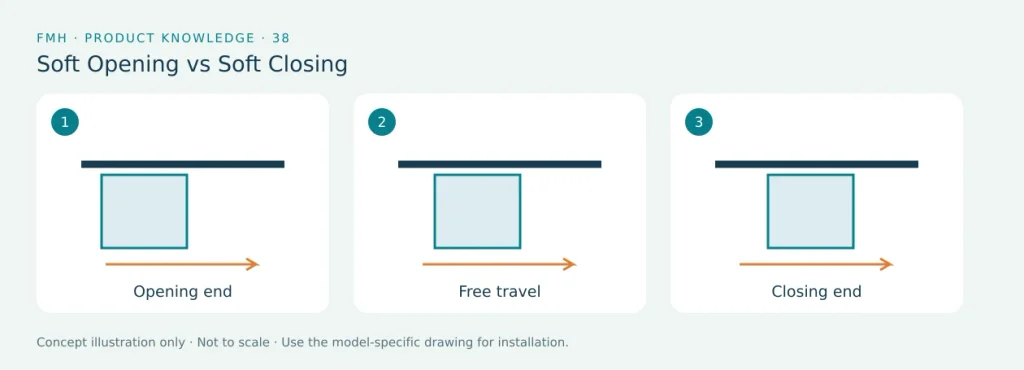
Soft Opening vs Soft Closing: Damping at One or Both Ends A sliding door can be slowed as it reaches its closed position, its open position or both. Suppliers may describe the last arrangement as dual soft close, two-way damping or soft opening and closing. Because naming varies, identify the controlled end positions on the […]
Soft Close, Self-Closing and Push to Open: Three Different Functions
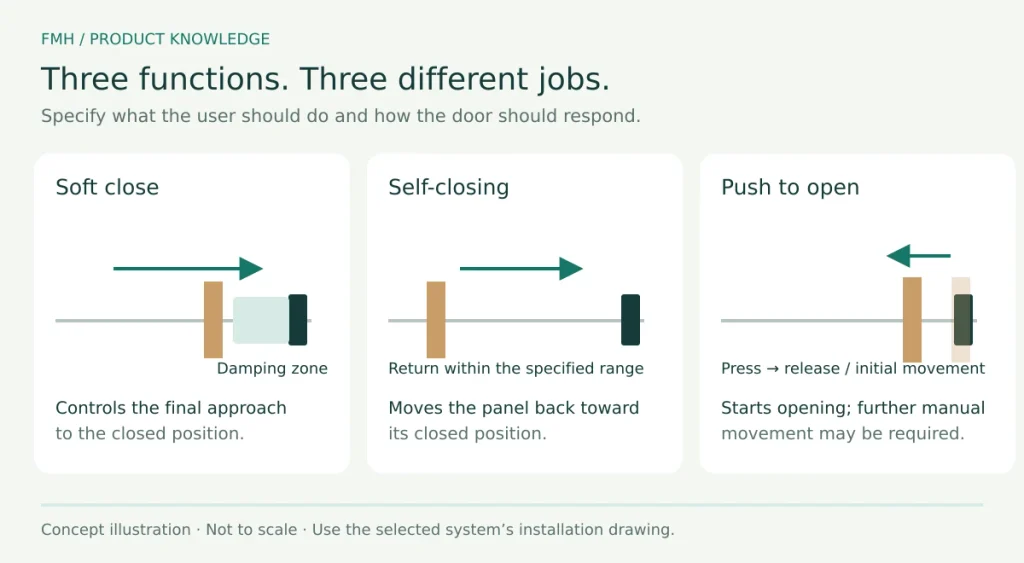
Soft Close, Self-Closing and Push to Open: Three Different Functions Soft close controls how a door approaches an end position. Self-closing provides a return action within its specified range. Push to open describes how the user starts or releases the opening movement. One door can combine these functions, but one term does not automatically imply […]
Pivot Door Clear Opening and Tail Clearance
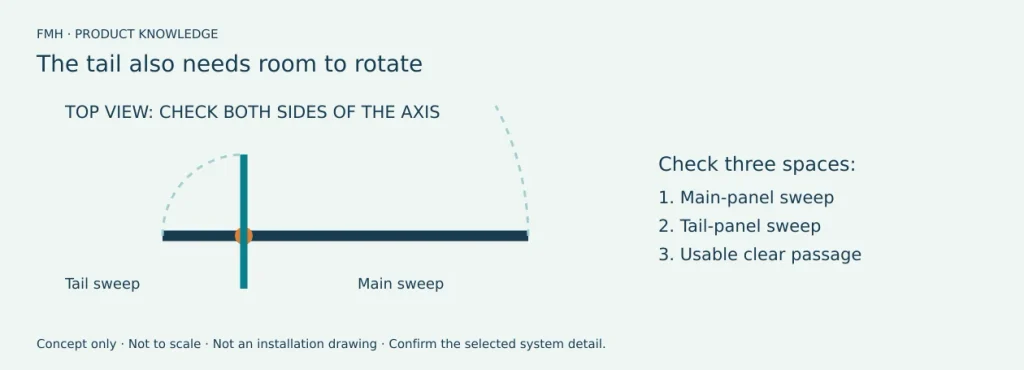
Pivot Door Clear Opening and Tail Clearance The width of a pivot-door panel is not the same as the clear passage available when it opens. Part of the panel remains associated with the pivot side, and the open leaf, its thickness and its fittings can occupy space within the opening. Measure the passage in the […]
Centre Pivot vs Offset Pivot Doors

Centre Pivot vs Offset Pivot Doors A centre pivot places the rotational axis near the middle of the panel. An offset pivot places it away from the centre, often nearer one edge. Changing this position changes how the door occupies the room when it opens. The choice should be made in plan and checked against […]
Specifying FMH PC01: What to Confirm Before Making the Door
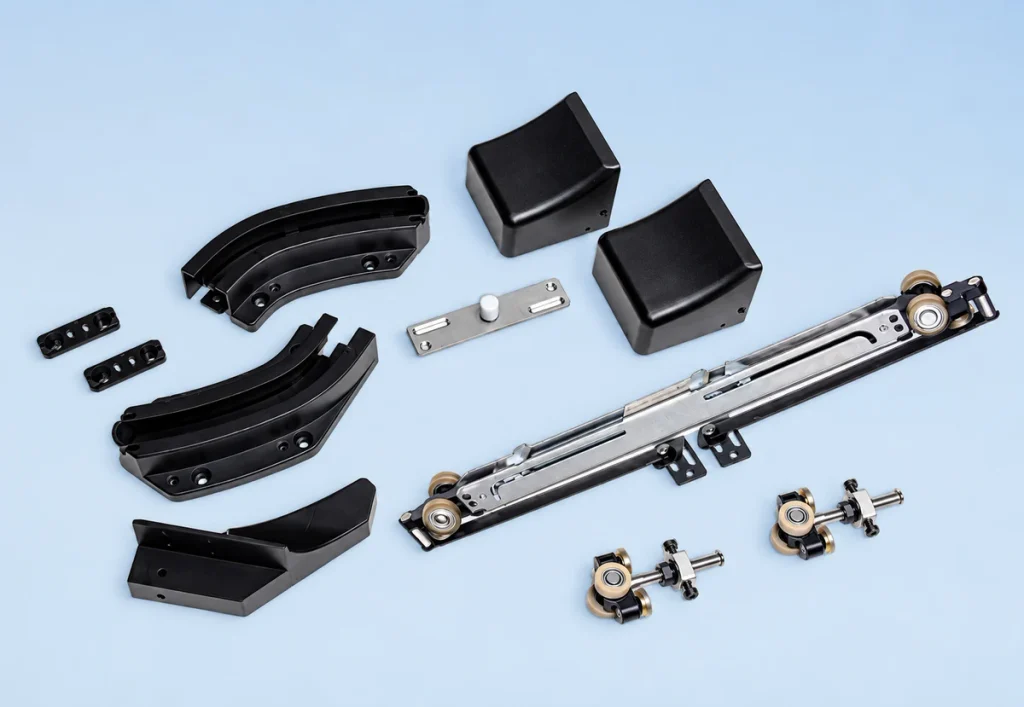
Specifying FMH PC01: What to Confirm Before Making the Door FMH PC01 is listed as an interior push sliding-door system for a single wooden panel. Its published features include flush-to-wall alignment, push-to-open operation, a steel track, three-dimensional adjustment and a floor design without a continuous track. Those features provide a useful starting point. A project […]
Flush Sliding vs Lateral Opening Doors: Reading the Motion Diagram
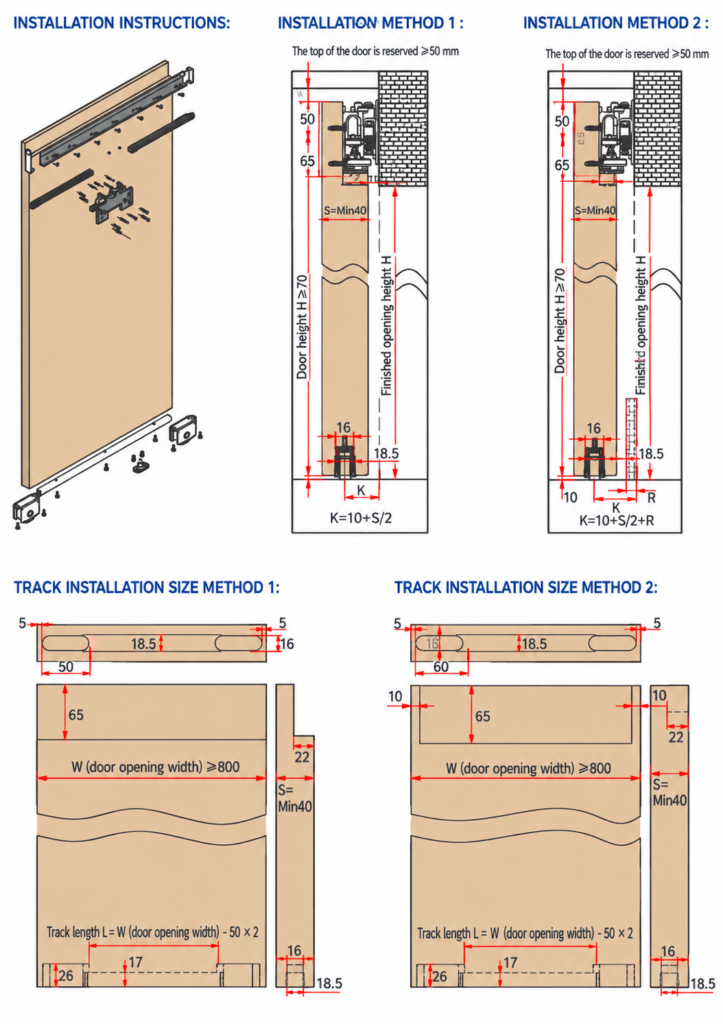
Flush Sliding vs Lateral Opening Doors: Reading the Motion Diagram Names such as flush sliding, lateral opening and swing-slide can describe different hardware arrangements. Some panels move inward before sliding. Others move through a combined rotation and translation controlled by a linkage. The most reliable comparison is a motion diagram showing the panel at several […]
Flush Push-In Sliding Doors: How the Movement Works

Flush Push-In Sliding Doors: How the Movement Works A flush push-in sliding door changes position before it travels sideways. In the closed position, its face aligns with the intended surrounding surface. To open, the panel moves away from that alignment into its sliding path, then travels beside the adjacent construction. This is a different movement […]
Concealed vs Exposed Sliding Door Tracks

Concealed vs Exposed Sliding Door Tracks An exposed sliding track makes its operating hardware part of the visible design. A concealed arrangement hides some or all of that hardware behind a cover, within a recess or through a specialised panel system. Concealment changes the visual result, but it does not remove the need for structural […]